From Yield Monitors to AI: How Technology Is Changing Agriculture
From Yield Monitors to AI: Nearly 20 Years of Change
As I sit here writing this article, harvest is fast approaching in northern Illinois. Technology is a funny thing. Change happens incrementally, but when you look back, you realize just how quickly things have evolved.
When I started in the business in 2007, very few of my clients had much, if any, technology in their equipment, aside from maybe a basic yield monitor in a combine and a seed monitor in the planter. Business was conducted on rainy days, as I would never think of calling a farmer while they were planting, and loan documents were mailed and signed with pen and ink.
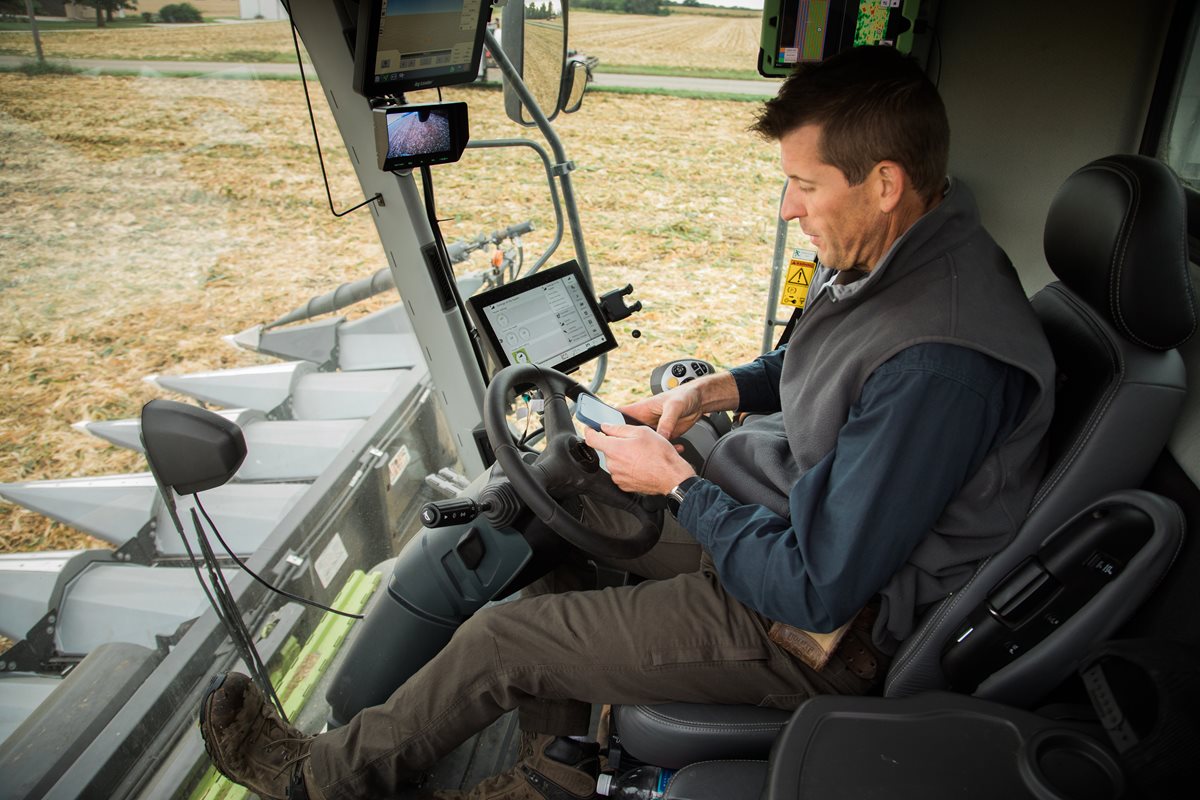
Almost 20 years later, tractors and planters can adjust settings automatically, operate at higher speeds and navigate fields with incredible accuracy. Autonomous equipment is now very much on the forefront.
As has been the case throughout agriculture's history, technology is quickly advancing the amount of work that one operator and one tractor can accomplish in a day's time. While autonomous equipment can feel like quite a leap forward, I would have never believed we would be where we are today if you had asked me years ago. And I have a feeling the next wave of advancement may happen faster than any of us can imagine.
.jpg)
Technology Is Changing More Than Equipment
The changes aren't limited to machinery and field operations. AI and technology are changing the agronomy side of farming as well. While still in the early stages, we are starting to see predictive agronomy models, more advanced soil and fertility analytics, and sprayers that use AI-enabled technology to identify and target weeds. These tools are beginning to change how agronomic decisions are made.
Automation is also quickly changing both grain and livestock operations. Some newer grain facilities can operate with very little hands-on involvement. Dairy farms have robotic milkers and systems that can autonomously mix feed. Many cows now wear RFID tags to monitor their health and help identify problems sooner.
Perhaps one of the biggest changes I've seen isn't a single piece of technology at all. It's technology's ability to reduce labor needs and allow equipment and facilities to accomplish more with fewer people. I recently toured a client's grain facility that operates almost fully autonomously. It's a good example of how technology can help an operation accomplish more while relying less on skilled labor for every task.
Cool Technology or a Worthwhile Investment?
As these technologies and others become more common, we may see costs decline and adoption increase across the industry. But that doesn't mean every new technology makes sense for every operation.
The challenge for producers is determining which investments are simply "cool" technology and which ones can create real value for their operation. Before making an investment, consider what problem you're trying to solve and what return the technology could provide.
Questions to Ask Before Investing in Farm Technology
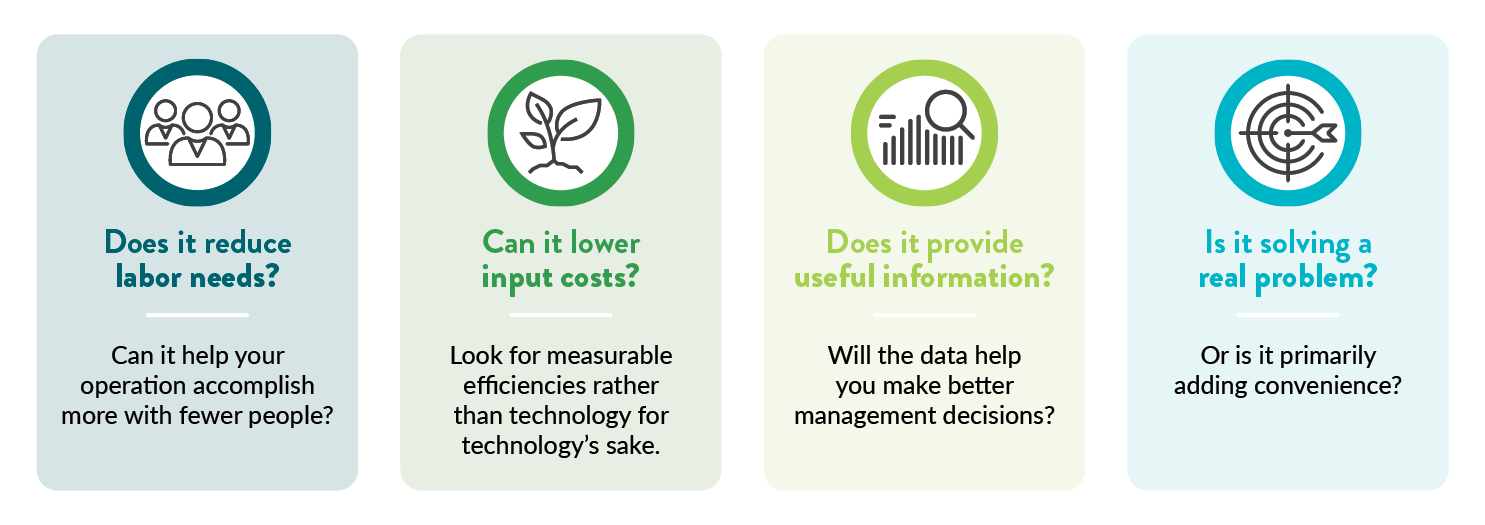
Technology doesn't necessarily have to produce a direct financial return to create value. Labor savings can be especially important as operations look for ways to accomplish more with fewer people. But there should be a clear reason for the investment and an understanding of how it will benefit the operation.
Like we've seen throughout the history of agriculture, modern practices and technology will continue to create opportunities for operators to become more efficient. The opportunity isn't simply to adopt technology because it's new. It's to understand where technology can create meaningful efficiencies, provide better information and ultimately help you make better decisions for your operation.
What's Ahead?
Nearly 20 years ago, I couldn't have imagined many of the technologies farmers use today. That's what makes the next 20 years so interesting. The possibilities for how technology could continue to reshape agriculture are difficult to predict, but if the last two decades are any indication, change will likely come faster than we expect.
Farm Equipment & Facility Loans
At Compeer Financial we offer agricultural equipment loans customized to meet your needs. Learn how we can help your farming operation today!
2025 Grain Farm Financial Performance: Profi…
Explore 2025 grain farm financial benchmarks, including profitability, breakeven prices, operating efficiency, debt capacity and working capital.
Are You a Grainmaker? A Profitability Self-A…
Take the Grainmaker Self-Assessment to evaluate your farm's profitability habits and discover strategies to improve revenue, manage costs and strengthen your operation.
Numbers Drive Farm Success & Remove Emotions…
By harnessing the power of numbers, farmers can navigate the complexities of their operations with confidence, ensuring resilience in an ever-evolving industry.