Cultivating Rural Business Growth
Strong local relationships can help rural entrepreneurs turn ideas into businesses that support families and communities.
Entrepreneurship is already woven into rural life. It shows up in farm operations, family-run businesses, repair shops, local retailers and service providers. It also shows up in the person testing an idea after work, the producer adding a new revenue stream or the resident who sees a needed service missing from town and decides to fill the gap.
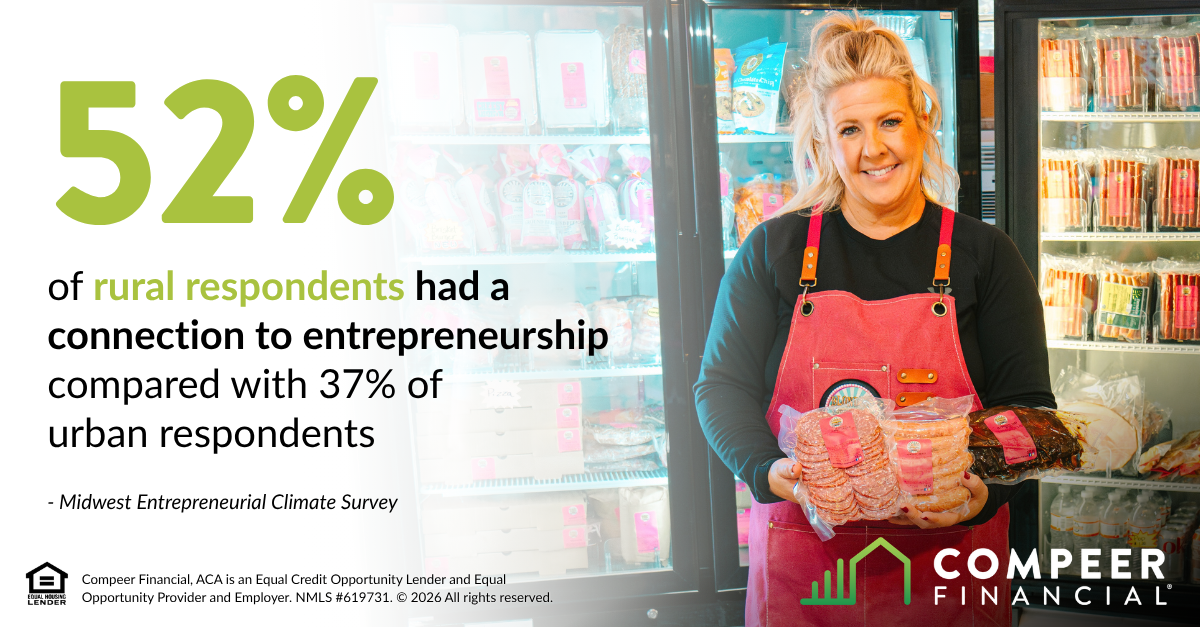
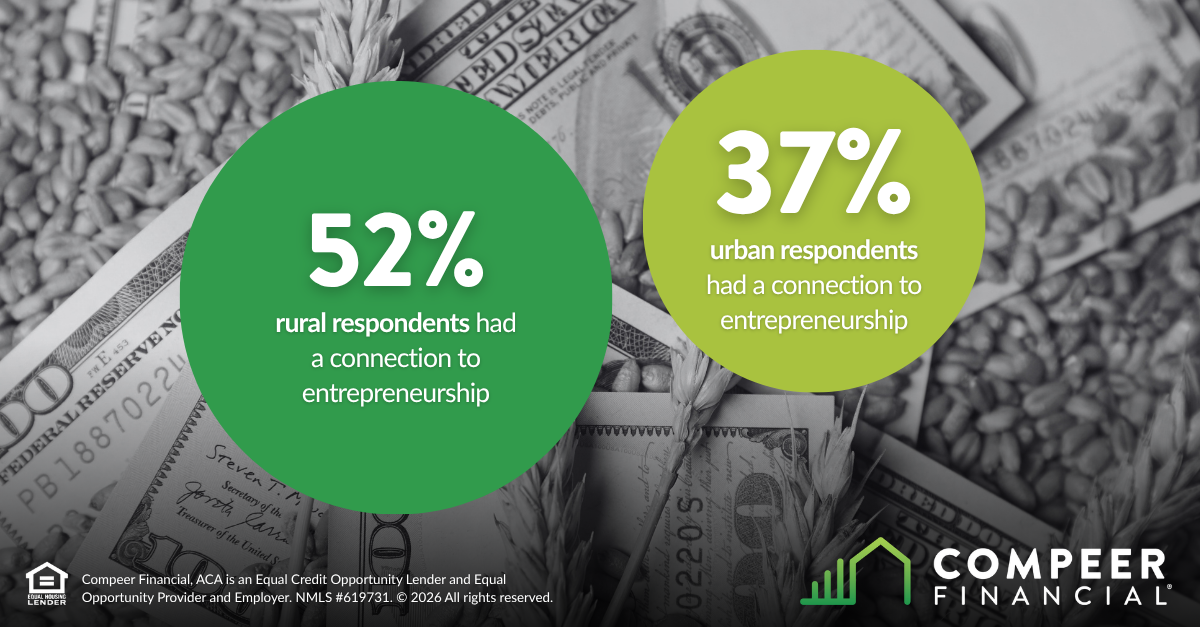
That depth of entrepreneurial energy was clear in a recent discussion at Compeer Financial’s Rooted & Rising Rural Forum. Findings from the Midwest Entrepreneurial Climate Survey, a collaboration between the University of Wisconsin-Madison and University of Minnesota Extension, showed that 52% of rural respondents had some connection to entrepreneurship. That included current and former business owners and those with prior entrepreneurial experience. In urban areas, 37% of respondents reported the same connection.
The finding challenges the idea that entrepreneurship is concentrated in larger cities. Rural communities have ideas, ambition and a strong willingness to solve problems. The opportunity is to make support easier to find and more useful at every stage of the business journey.
Entrepreneurship takes more than one form
Not every rural entrepreneur is building a high-growth company or planning to hire a large team. Some want to create a reliable income, keep a family in the community or offer a service neighbors need. Others may be ready to enter new markets, add employees or build a business that reaches well beyond their county.
Both paths matter. A self-employed owner creates work for themselves, supports their household and keeps money moving locally. A growing company can create jobs, add services and strengthen the local tax base. Communities can support both by recognizing that success is not defined by one measure.
Rural businesses also begin for different reasons. Some start because an owner recognizes an opportunity. Others begin out of necessity when a community loses a store, service provider or employer. Either starting point can lead to a strong business when the owner has practical guidance, time to learn and people who can help them make informed decisions.
Make the path to support easier to see
Rural entrepreneurs may face real barriers, including smaller local markets, limited broadband, transportation challenges and difficulty finding specialized employees. But the forum discussion highlighted another challenge: available support can be hard to see or navigate.
Only 18% of rural survey respondents said their community had more opportunity than other communities, compared with 35% of urban respondents. That does not necessarily mean rural communities have less potential. In larger metro areas, networking events, business programs and support organizations are often more visible. In rural communities, many of those same resources may exist through lenders, business development organizations, Extension, community education, libraries and local leaders, but entrepreneurs may not know where to begin.
A long list of programs is rarely the answer. Entrepreneurs need a clear next step from someone they trust. The right conversation may uncover that an owner asking for a loan first needs help understanding cash flow, testing pricing or refining a business plan. In another case, an established business may be ready for equipment financing, working capital or a broader advisory team.
That is why warm referrals matter. A banker, accountant, chamber leader, mentor or fellow business owner can make a personal introduction that helps an entrepreneur avoid dead ends and reach the right resource sooner. When local partners know one another’s strengths, they can create a support system that feels seamless to the business owner.
Trust is a rural advantage
The survey also pointed to a meaningful rural strength. Respondents in rural communities were more likely than their urban counterparts to believe they would receive support from community members and local businesses. They also reported slightly higher levels of trust, caring and willingness to work together to solve problems.
That social capital can be one of a community’s most valuable economic development tools. In a small town, an entrepreneur may already know the person who can make an introduction, offer advice or share a hard-earned lesson. Communities can build on that strength through peer groups, mentor connections, informal entrepreneur roundtables and opportunities to hear local business stories.
Recognition matters, too. Celebrating an entrepreneur’s contribution can make business ownership feel more visible and achievable for others. The most helpful stories are honest ones. They show the challenges, adjustments and relationships behind a business, not only the finished success story.
New tools can give small businesses more capacity, especially when hiring specialized help is not realistic. Artificial intelligence and automation can support marketing, administrative work, design and early planning. They may also help businesses respond to workforce shortages in some industries.
They are not a substitute for business fundamentals. An AI-generated plan still needs to reflect a real customer, local market, workable pricing and sound financial assumptions. Rural entrepreneurs and their advisors can use technology as a starting point, then validate the output with customer conversations, local knowledge and trusted guidance.
Build on what rural communities already have
Rural entrepreneurship grows when people can find the right connection at the right time. Communities do not need a single organization to do everything. They need strong relationships among lenders, mentors, educators, local businesses, economic development partners and entrepreneurs themselves.
For Compeer, supporting rural communities means helping clients move forward with practical insight, reliable service and a clear understanding of their options. When entrepreneurs have access to capital, guidance and trusted connections, they can build businesses that create value close to home and help rural communities continue to grow.