What Can Farmers Control Right Now?
Today's operating environment continues to present challenges for many producers. Higher borrowing costs, softer commodity prices and ongoing cost pressures are prompting many operations to take a closer look at cash flow and financing decisions.
While producers can’t control inflation, interest rates or commodity markets, they can take steps to strengthen their financial position and improve financial flexibility.
During Compeer Financial's recent Agri-Mindset webinar, our economists and financial experts discussed today's economic environment and shared strategies producers can use to focus on what they can control.

Understanding Today's Interest Rate Environment
Many expected interest rates to begin declining this year.
Instead, inflation has remained above the Federal Reserve's long-term target, leading policymakers to keep rates higher for longer than anticipated.
At the same time, commodity prices have softened while most operating costs remain elevated, creating additional pressure on farm margins.
Although producers can't control interest rate policy, understanding today's environment can help inform financing decisions and long-term planning.
Farm Cash Flow Management Is the Bigger Picture
Interest rates are only one piece of your financial picture.
Cash flow determines whether your operation has enough money available to cover operating expenses, loan payments, taxes and family living expenses throughout the year.
Profitability tells a different story—it measures whether the operation is generating enough return to support long-term success.
Understanding both provides a clearer picture of your operation's financial health and can help guide more informed business decisions.
Start With Your Financial Position
It’s a good idea to review your financial position several times a year.
Take a look at:
- Enterprise budgets
- Cash flow projections
- Working capital
- Current assets and liabilities
- Expected income through harvest
A proactive financial review can help identify opportunities before harvest and year-end decisions begin, with time to make adjustments if necessary. Working with a trusted advisor can help you spot trends and opportunities to make adjustments in real time.
Evaluating Your Debt Structure
When producers think about financing, they often focus on interest rates.
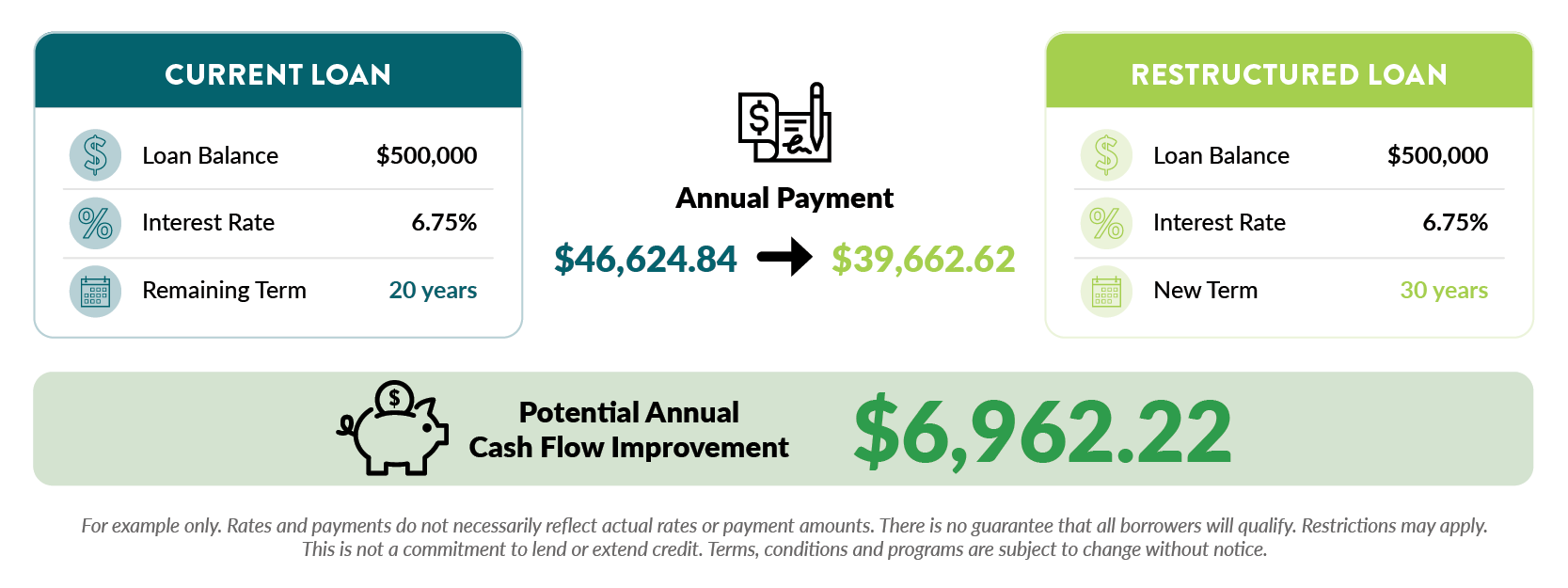
But rates are only one part of the equation. Loan structure—including repayment terms and payment schedules—can also affect cash flow. Even if your interest rate stays the same, a refinance could result in more favorable repayment terms, allowing you to improve your operation’s cash flow in the near term.
Reviewing your current financing doesn't automatically mean making a change. It simply provides an opportunity to determine whether your existing loan structure still supports your operation's goals.
In this example of a loan restructure, the interest rate remained the same. But by adjusting the terms of the loan, the payments were reduced, freeing up available cash.
Should You Wait for Interest Rates to Decline?
Many producers ask:
"If rates haven't dropped, why would I refinance?"
It's a reasonable question.
While refinancing is often associated with securing a lower interest rate, it can also help improve monthly cash flow by restructuring debt to better fit the needs of an operation.
For some producers, creating financial flexibility today is just as valuable as waiting for future rate changes.
Planning for Today's Needs and Tomorrow's Opportunities
One reason some producers hesitate to refinance is uncertainty about where interest rates might go next.
If rates decline after refinancing, did they act too soon?
It's a reasonable question and one many producers are asking.
Rather than trying to predict exactly where interest rates will go, some producers are choosing to focus on improving cash flow today while keeping future options in mind.
Once you become a Compeer Financial member-owner, you may be eligible for interest rate conversion opportunities that provide additional flexibility if market conditions change. Your financial officer can explain how rate conversion works and when it might make sense for your operation.
If you're unfamiliar with rate conversion or wondering how it differs from refinancing, we've outlined the key differences in our article Farm Loan Refinance vs. Interest Rate Conversion: Understanding Your Options.

Take the Next Step
Every operation is different.
If you're considering your financial position or looking for ways to improve cash flow, watch our Turning Farm Plans into Profit: Cash Flow Management webinar, featuring several Compeer Financial experts. This deep dive will help you evaluate whether your current financing still aligns with your goals.
|
Farm Loan Interest Rates: Refinance & Intere…
Learn how farm loan interest rates affect refinancing and discover how Compeer Financial's interest rate conversion options may help eligible borrowers save.