State of the Food & Ag Deal Market

Depending on where companies participate in food and agribusiness financing today, the market presents either stiff competition or significant opportunity.
Recent shifts in investor risk tolerance have created noticeable changes across the business cycle. Competition among senior lenders has remained steady. Investors have also shifted more capital toward growth-stage and lower-risk investments. That shift has slowed venture capital activity in agriculture and reduced funding for early-stage businesses.
Some late-stage investors, however, continue to find success by targeting niche opportunities across the sector.
Firms such as Proterra Investment Partners, Midwest Growth Partners and AGR Partners continue to grow because businesses need more flexible agricultural finance options.
Many food and agribusiness companies are looking for financing solutions that support growth across the food system. This includes businesses involved in production, processing and distribution.
Higher interest rates in 2022 and 2023 slowed investment activity in sectors such as alternative proteins. More investors moved capital into lower-risk opportunities. That change created more competition for startups seeking funding and gave many private equity investors stronger negotiating power.
In production agriculture, however, higher interest rates have not significantly slowed loan demand.
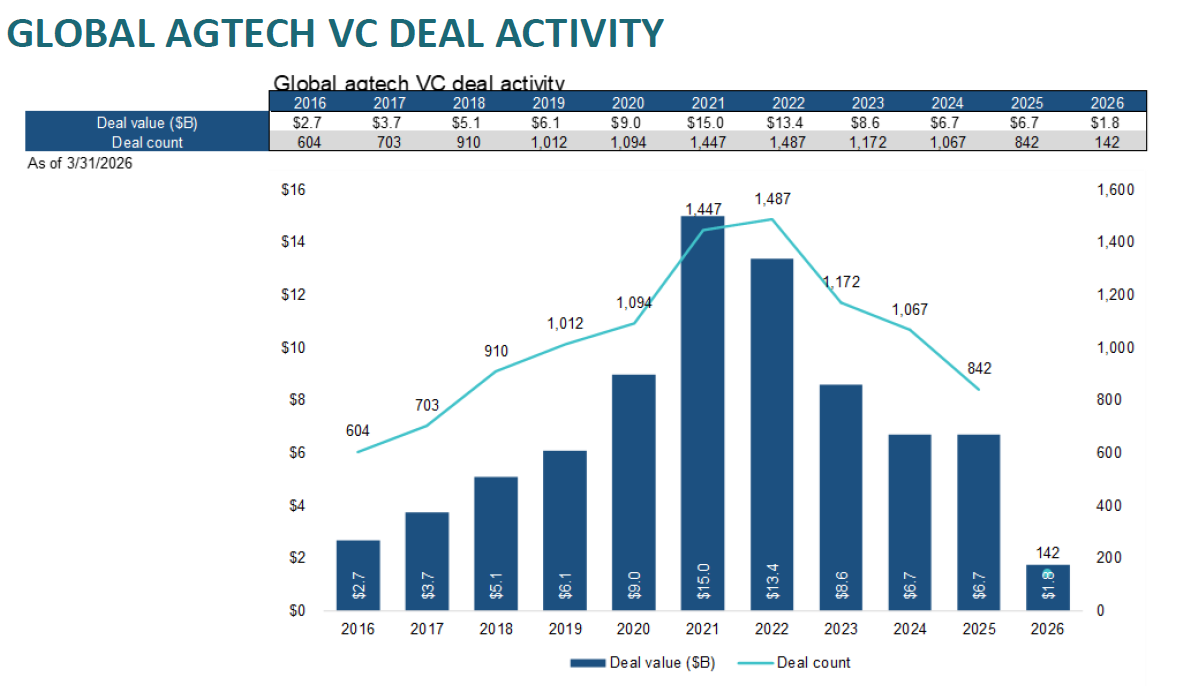
Chart from Pitchbook
According to the Federal Reserve Bank of Kansas City, farm loan demand has remained strong. Stable farmland values, active land sales and rising operational expenses have all contributed to continued borrowing activity.
Farmer Mac data also shows producers adapting their financing strategies in response to changing market conditions. Many farmers and ranchers are choosing longer loan terms while keeping flexibility in interest rate structures. These agricultural lending trends show how producers are managing working capital, operational expenses and long-term business goals.
Most food and agribusiness businesses still have access to financing options and capital partners. Today, financing decisions often depend on cash flow, operational expenses, business plans and long-term growth goals.
Agricultural investment trends continue to change across the industry. Businesses that understand where capital is moving may be better prepared to respond to new opportunities and market conditions.
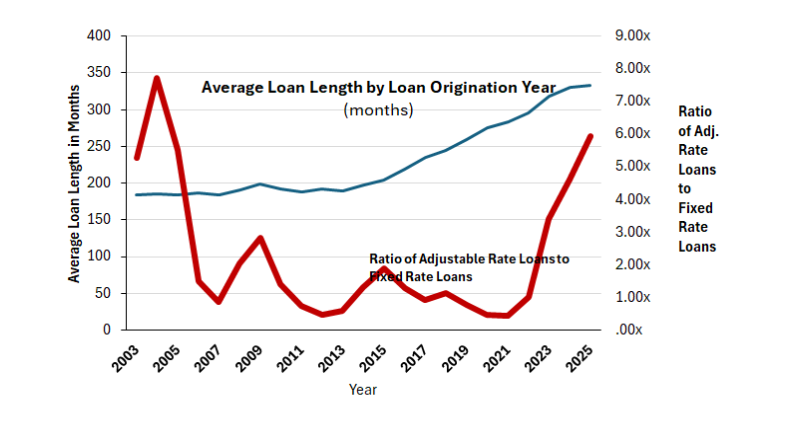
Farmer Mac Data
Working with a trusted Compeer Financial lender can help businesses evaluate financing options and support long-term growth planning.