Higher Interest Rates: What They Mean for the Dairy Industry

Higher Interest Rates: What They Mean for the Dairy Industry
For the first time in more than three years, the Federal Reserve raised the benchmark federal funds rate. The quarter-point increase moved the target range to 3.75% to 4%.
Most people largely anticipated the move. In a unanimous 12-0 vote, the Federal Open Market Committee increased its key interest rate by 25 basis points. That marked a shift from the June meeting, when the committee voted to keep rates unchanged. Federal Reserve
The June meeting was also Kevin Warsh's first as Federal Reserve chairman. At the time, the Fed acknowledged that inflation remained elevated and required continued monitoring. The September increase offered the first indication of how the Fed may respond under Warsh's leadership when inflation remains above its 2% target.
For businesses throughout the dairy supply chain, from farm operations to dairy processing, the question now is what higher interest rates and persistent inflation could mean for borrowing costs, consumer spending and future investment.
Inflation Remains the Primary Driver
In simple terms, inflation remains the main reason behind the rate increase.
Inflation remains above the Federal Reserve's 2% target. August data showed core CPI at 2.4%, while core PCE was 3% year over year. Bureau of Labor Statistics
Most of us remember the spending and goods-shortage cycle that followed the COVID-19 pandemic. Today, a combination of consumer spending, government spending, capital investment and geopolitical uncertainty continues to influence inflation.
That matters because continued fiscal expansion can put pressure on financial markets and contribute to higher borrowing costs. The federal government is also paying approximately $1.25 trillion annually to service the national debt.
For businesses, the broader point is that inflationary pressures remain in the economy, and higher rates are one of the Federal Reserve's primary tools for addressing them.
What Does a Quarter-Point Increase Mean?
What does a quarter-point interest rate increase actually cost consumers?
The impact of a single 25-basis-point increase can be difficult to quantify. The effects become more noticeable when higher rates are layered onto existing debt and new borrowing.
Credit card debt, home equity lines of credit (HELOCs) and other variable-rate debt can be affected relatively quickly when benchmark rates increase.
Based on average credit card and HELOC balances, a quarter-point increase can add approximately $129.41 in annual interest costs.
The impact can be larger for consumers taking out new fixed-rate loans. Based on average loan balances, the same quarter-point increase could add approximately $731.66 per year to the cost of a new auto or home loan.
A quarter-point increase may not seem dramatic on its own. But it can have an impact on households already managing higher prices for everyday goods and services.
Lower-income households generally have less flexibility to absorb increases in necessities such as energy and food. When more household income goes toward those expenses, consumers may have less to spend on discretionary purchases or higher-priced food products.
We're in the food business. That's why it matters.
Energy Adds Another Layer
Energy prices remain an important inflation factor, particularly for agriculture and food manufacturing.
Geopolitical uncertainty continues to contribute to volatility in global energy markets. A sustained increase in crude oil prices can push headline inflation higher. The effects can also spread through transportation, freight, production and other costs. U.S. Energy Information Administration
At the farm level, higher energy prices affect fuel used in the field and on the road while also contributing to higher fertilizer and other input costs.
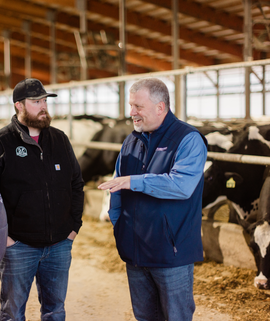
Those higher costs affect the entire dairy supply chain, from farm operations to dairy processing and manufacturing.
For dairy businesses, energy is an important factor to watch. Higher energy costs can affect margins throughout the supply chain.
What Comes Next for Interest Rates?
The Federal Reserve's September projections provide some insight into where policymakers believe rates and the economy may be headed, but projections are just that: projections.
The median projection for the federal funds rate is 4.1% at the end of 2026 and 2027, followed by 3.9% in 2028. That path would be consistent with approximately one additional quarter-point increase this year. However, individual policymakers' projections vary, and future decisions will depend on economic conditions. Federal Reserve
The Federal Reserve's dot plot reflects individual interest rate expectations from policymakers and is updated following each projection meeting. Inflation, employment, economic growth and geopolitical developments can all influence future decisions.
That uncertainty makes it difficult to build financial plans around a specific interest rate prediction. Rates six months or a year from now remain difficult to predict.
Instead, businesses can focus on understanding their exposure.
- How much debt is variable rate?
- What projects may require financing over the next several years?
- How would higher borrowing costs affect expected returns?
- Where does the business have flexibility if rates remain elevated longer than anticipated?
Those questions are particularly relevant for dairy manufacturers and suppliers considering facility expansions, equipment upgrades or other significant capital investments.
Control What You Can
Interest rates are only one piece of the financial picture, but they remain an important one.
Long-term Treasury yields provide another indication of borrowing conditions across the economy. Higher yields can benefit savers, but they also create a real cost for borrowers.
For businesses carrying debt or considering new capital investments, understanding that exposure is important.
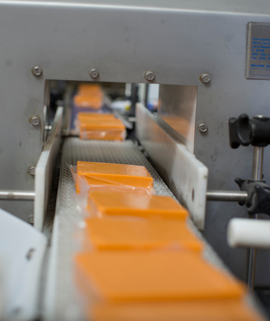
No business can control what the Federal Reserve does next. What businesses can control is how prepared they are for different outcomes.
Review debt structures and understand where variable-rate exposure exists. Evaluate upcoming capital needs before financing becomes urgent. Consider how higher energy and borrowing costs could affect margins and work with financial partners to evaluate available risk management strategies.
Interest rates may remain uncertain, but businesses can prepare for different outcomes.
Understanding your risks and having a plan can provide greater flexibility as conditions change.